Thursday, September 16, 2010

The Truth about Travel Guidebooks


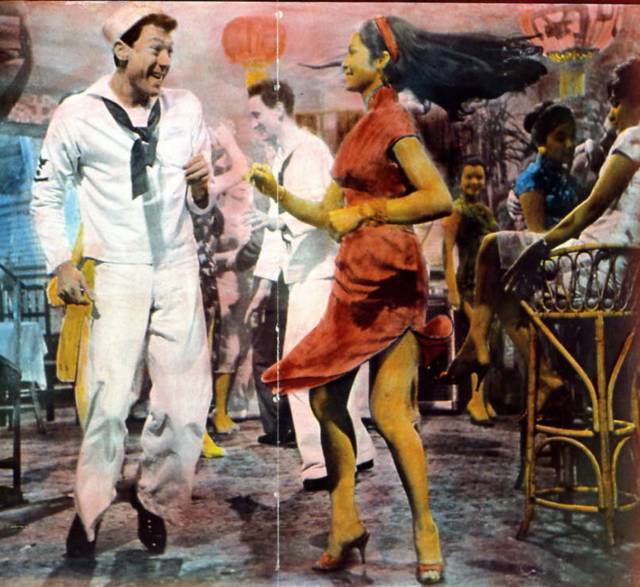
Old Chinese Postcard


National Geographic Adventure

Pelton's World

Cooking the Books

Five things travel guides never tell you.

Robert Young Pelton


I confess. I used to edit a travel guidebook series. The kind of books that said "eat here," "stay there," "visit this." I hired cool, funny people to boil down firsthand travel accounts into a few pithy pages, figuring that truly curious travelers would want to discover local gems in both the most touristed and most dangerous places. Well, I was wrong. The world didn't seem to want to be too far from the madding crowd—they wanted to know what time to get in line for the Louvre. The experience did, however, afford me the chance to compare, investigate, and become one of the world's greatest experts on the travel guide business. So from me to you, I will pass along the top five secrets, in no particular order, that guidebook publishers don't want you to know about their products.


1) THEY'RE OUTDATED.


It can take up to two years to get a book from drawing board to bookstore. If the guide clutched in your jet-lagged hands is "annually updated," I guarantee large chunks of its information were gathered long before the publication date. There's no way even a freshly published guide could address the current conditions in, say, Iraq in their latest editions. When looking for the most up-to-date, reliable safety information, I trust Google ("tourist + killed" usually does the trick).


2) THEY FUDGE THINGS.


Have you ever noticed how writers avoid telling you if they have actually been to a place or, if they have, how long ago? You can't expect a poorly paid guidebook writer with a three-month deadline to actually visit every listing in the book, especially if it's a guide to a country the size of Russia or Brazil. Whenever they start to use autopilot vocabulary to describe a standard budget hotel room—"cheap and cheerful," "cozy and comfortable"—chances are the writer has never seen the place.


3) THEY WEAR ROSE-COLORED GLASSES.


Developing countries need tourist dollars, but mass tourism needs a pretty face—even if the business bolsters some of the world's uglier inequities: underpaid labor and prostitution, to name just two. If a travel guide to CancĂșn or Thailand told you the whole truth about the impact tourism has had on the region's society, you probably wouldn't want to go, let alone buy the guidebook.


4) THEY KILL WHAT THEY LOVE.


Ever since Marco Polo came back from the East raving about the Gobi, travel guides have been sending battalions of tourists to destroy the world's treasured destinations. The "ant trails" carved by these hordes are usually infested with beach vendors (Goa), touts (the Great Pyramids), and thieves (take your pick)—not smiling locals wearing grass skirts or lederhosen. Attractions in popular guidebooks are never quite the idyllic places you imagine them to be. Even travel guide writers like Rick Steves can't book a room at some of their "off the beaten path" places anymore.


5) THEY WORK BEST IN COMBINATION.


No single guide has it all. I will say, however, that Lonely Planet provides some excellent city maps, Rough Guides have great cultural backgrounders, Michelin Red knows where to get a good meal, and if you like ancient monuments the Blue Guides rule. I'll even give a big thumbs up to the Trailblazer series. But most of this stuff can be scrawled into a notebook at the library and added to the up-to-date info you've culled from the Web. As for me, yeah, I still write guidebooks—but they skip hotels, restaurants, tours, and attractions. Ask the locals where to go and what to do. Travel is still an adventure, after all. That's something that the guidebooks seem to forget.


10 Better Choices


Tired of clinging to that guidebook like it's a security blanket? Try reading something that tells you how to appreciate the art of travel rather than how to spend money. Here are ten insightful travelogues that will inspire rather than dictate.


The Beach, by Alex Garland

First-Time Around the World, by Doug Lansky

Globetrotter Dogma, by Bruce Northam

Personal Narrative of a Pilgrimage to Al Madinah and Mecca, by Sir Richard Francis Burton

The Practical Nomad, by Edward Hasbrouck

Traveler's Handbook, edited by Amy Sohanpaul

The Traveler's Tool Kit, by Rob Sangster

Travels in Asia and Africa 1325-1354, by Ibn Battuta

The Travels of Marco Polo, by Marco Polo

Vagabonding, by Rolf Potts


National Geographic Adventure Column by Robert Young Pelton on Travel Guidebooks


Fodor's Forum on Biggest Tourist Rip-Offs


The World of Suzi Wong


What's the biggest tourist rip-off that you have ever experienced?


Author: garyt22

Date: 09/19/2004, 10:56 pm

Message: Just wondering... we just paid $160 for our family of four to just "walk around" the Polynesian Cultural Center... seemed pretty steep for what we saw... anybody experience a similar rip-off on any of their travels? PS Please don't try to defend the PCC... i was there.


Author: Ryan

Date: 09/20/2004, 08:23 am

Message: With a volunteer organization here in NYC, I took a group of kids on the NBC studio tour a few years ago. It was expensive and about the only thing visually interesting was a short film on NBC. But, for what they charged it really was underwhelming.


The other was the Long Bar at the Raffles Hotel in Singapore. The home of the Singapore Sling now sells them premade in souvenier glasses.


Author: Jayne1973

Date: 09/20/2004, 09:01 am

Message: Meteor Crater, Arizona


Spent about $60 for our family to go stare at the big hole for a few minutes. We are intersted in that type of thing, but for us it was just an overpriced pit stop.


Author: DonnaD44

Date: 09/20/2004, 12:24 pm

Message: Disneyworld! Sorry fans, but I just loathe the place.


Author: Dreamer2

Date: 09/20/2004, 12:33 pm

Message: While I do love Disney World, we took our first trip to Calif last April and went to Calif Adventure at Disney Land. It was so crowded, I actually got on only 2 rides the entire day - even with FastPass and our family riding as "singles!" (Kids and Dad did a couple more, but I designated myself as the FastPass line-waiter.) Plus we had a pretty horrendous lunch at the Vineyard style restaurant. Pretty expensive day for a family of four, with very little "return on investment."


I'm also always amazed at the lines waiting to get into the "Witch House" in Salem, MA. It's a fine historic home, but really nothing to do with "witches" except that it was owned by one of the Judges of the trials. Very boring tour of antiques, more suited to historians than kids. None of that "living history" stuff the younger generation is accustomed to. The Witch Museum, however, does give a historic presentation with low-tech theatrics. I do enjoy that and the Hawthorne House of 7 Gables - for those of you heading to Salem next month!


Fodor's Forum on Biggest Tourist Rip-Offs


Wednesday, September 15, 2010

New York Times on Travel Guidebooks


Morning Sun


New York Times

August 22, 2004


PRACTICAL TRAVELER

A Guidebook for Every Taste

By SUSAN STELLIN


PLANNING a trip involves many difficult decisions, but near the top of my list is standing in a bookstore trying to choose from a daunting lineup of guidebooks, a purchase that brands the owner as much as an army duffel bag or a Louis Vuitton suitcase.


Fifteen or 20 years ago, the choice was simpler. Backpackers and budget travelers hit the road with Let's Go, Rough Guides or Lonely Planet. Those taking a break from a job or enjoying retirement packed Fodor's or Frommer's, less adventurous but good for nuts and bolts like museum hours and restaurant addresses. Art and culture connoisseurs carried a Blue Guide, and high fliers relied on Michelin Guides to steer them to Europe's notable hotels and chefs.


To some degree, those characterizations still hold true. But as the budget guides have broadened their focus to retain readers now older and earning a decent salary, and the mainstream guides have tried to become more hip, the lines have blurred. Plus, established publishers have started new books aimed at a wider range of travelers taking different types of trips, and there are the niche guidebooks to consider: titles for hikers, bikers, women, families, gay travelers and people who won't leave home without their pets.


With all these choices, it may be time to branch out from a favorite series and experiment.


Publishers scaled back new projects in response to a decline in travel after 2001, but with Americans again packing their bags, travelers can expect to see more titles. One trend that's catching on, partly in response to post-Sept. 11 travel patterns, are mini-guides designed for short trips to a single city.


Hitting Highlights, in Color


The British publisher Dorling Kindersley started its Top 10 series in 2001, shorter versions of its DK Eyewitness Guides, which are known for glossy pages and color photographs. Now available for 40 cities, in the United States and abroad, the Top 10 books (about $10) choose 10 attractions as the best to see or do, plus give additional lists like the top 10 Belgian beers in the Brussels book.


Fodor's introduced a similar "See It" series this spring, now available for 12 cities. The See It guides, which start at $22.95, are nearly 400 pages, compared with 150 to 200 pages for the Top 10 books, but Fodor's also sells a smaller City Pack guide ($11.95) to a city's top 25 sights, plus a foldout map. Both series feature lots of color and pictures.


Michael Spring, publisher of Frommer's Travel Guides, said that although color guidebooks were more difficult to update frequently, Frommer's also planned to add more photos and color to its books. He said Frommer's and other publishers were also moving toward more lists highlighting what travelers shouldn't miss. A chapter at the beginning of most Frommer's guidebooks showcases the "best of" a destination. For example, Frommer's Italy 2005 guide ($22.99) offers its take on the best museums, ruins, cathedrals, restaurants and romantic getaways, like a visit to the hilltop town of Todi, south of Florence.


"What people want is information that will take them where their neighbors haven't been," he said. The Frommer's Portable Guides are among the most compact available; I bought one for $10.99 for Rio de Janeiro last year and found it covered the basics I needed for a three-day visit.


Lonely Planet has also tried to broaden its line to reach a wider audience, in part by introducing a shorter "Best of " series of city pocket guides ($11.99 to $14.99) and another "Road Trip" series ($10) focused on weekend road trips, which complement its core lineup of country and regional guides, and its "On a Shoestring" series ($23.99 to $33.99), still popular with the backpacker set. "Historically, Lonely Planet had been primarily about long-haul travel," said Robin Goldberg, vice president for marketing and business development for Lonely Planet Publications. "But that's typically not a traveler when they're in their 30's in the middle of their career and have a week to travel."


Ms. Goldberg said Lonely Planet was adding more color, as well as insights from insiders. "I think people are looking for ways to pull out what they want quickly," she said.


Not to miss the boat, the Rough Guides introduced a new Directions pocket series ($10.99) in June, with more color and photos than its other guidebooks. It, too, is designed for shorter trips. Geoff Colquitt, the company's director of marketing for North America, said the smaller guides still have a writing style "on the edgy side."


Sorting the Choices


So which guidebook should you choose? One guide definitely does not fit all: paper quality, the book's weight, the writing style, the size of the type, the number of photos, the quality of the maps and even page layout are all personal preferences - which often vary depending on the trip's length, the destination and who else is traveling.


"Customers always ask, 'What's the best book?' " said Lee Azus, owner of Get Lost Travel Books, a travel bookstore in San Francisco. "And I say: 'Who are you? What do you like to do?' "


For example, Mr. Azus said that if someone asks what's a good guidebook for Cuba, he steers them toward the Moon Handbooks, another series aimed at more adventurous travelers. Moon specializes in the Americas and Asia. I just bought Moon's Alaska guidebook ($19.95) - my first foray into the series - and found it had a good mix of history, opinion, and nuts and bolts listings.


In a similar genre, Mr. Azus said he took a Footprint Guide on a trip to Laos, and though he likes Lonely Planet and Rough Guides, he said he was glad he had the Footprint Guide ($19.95) because the listings aren't as well known. Otherwise, he recommended looking at a place you know well and comparing different series' entries for that destination; if one book recommends a restaurant you know is mediocre, it's likely the series doesn't match your tastes.


Also, look at the copyright date on any book you're considering; newer is definitely better.


David Garber, travel buyer for Barnes & Noble, said that among the series selling well at Barnes & Noble are the Rick Steves guides, which focus on Europe. "He tries to give you the best value for your budget, and his books are very opinionated," Mr. Garber said. Lonely Planet still seems to be "the guidebook of choice for solo travelers," he said, though the Moon Handbooks are selling well for domestic travel, while Frommer's and Fodor's "are still pretty big as far as mainstream guidebooks are concerned." The DK Eyewitness Guides are also popular with Barnes & Noble customers, in part for their photos and cultural information.


There are dozens of other series; the ones mentioned here barely scratch the surface. Get Lost Travel Books has helpful descriptions of more than 25 series at www.getlost books.com/p_books.html.


My advice: don't be a slave to the same series you've always bought - or to what the book recommends. Sometimes, the best restaurants, cafes or hotels are the ones you stumble across on a side street. So let serendipity - and your own judgment - be your primary guide.


New York Times on Travel Guidebooks


Sunday, September 12, 2010

Post from Travel Guidebook Writers

Good morning fellow travel writers:


I'm going to delete all the personal references below, but this is a very important subject for writers - fiction, non-fiction, travel, etc. Everyone who is qualified should go to the excellent website operated by Tom Brosnahan, and join in this discusion.


Today:


TGW


Re: Google copies "Inside the Book"

Eddie xxx

Oct 07, 2004 07:11 PDT


On 7 Oct 2004 at 13:17, "Tom" wrote:


From what I read, Google allows the author to stipulate how much of a book may be read by one user in a 30-day period, from 20% to 100%. Google has no real way to identify unique users. If you clear your Google cookies, and reconnect to a dial-up connectiion so as to get another IP address, you appear to Google as a new user.


Remember, Rough Guides said that sales of its guides increased after it put the full text online. Guidebooks are different, I know, but it's an interesting fact to bear in mind.) Sales of print books may increase, but what about sales of e-books? If Google and Amazon give away the e-books, you won't sell many e-books.


Remember: the person who sells the book makes a LOT more money per-copy than the person who writes the book. With e-books, that shouldn't be true. Here's what I said in my blog:


Google joins Amazon in e-book plagiarism


A year ago this month, I noted reports that Google.com was planning to emulate Amazon.com's copyright-infringing scheme for online distribution of unauthorized bootleg images of the pages of books to which it doesn't own the copyright or electronic rights. In the intervening year, bootleg e-books assembled from page

images obtained from Amazon.com have already started showing up on Kazaa and Internet Relay Chat (IRC). (For more on all of this, see the Writing and Publishing section of this blog.)


Today, Google.com launched a beta version of its e-book (page image) Web site. It looks like Google's page image distribution system will be virtually identical to that of Amazon.com. Google claims broadly, that, "To further protect your book content, printing and image copying functions are disabled on all Google Print

content pages." But the fine print reveals that they will only _try_ to disable "right-click" cut, copy and paste, and printing (presumably through the same sort of buggy, platform-specific javascript that fails to protect page images on Amazon.com). In practice, it is technically impossible for any Web server function to prevent the saving or printing by a Web client of any image that client can display.


The question that remains unanswered is whether in practice Google.com will -- as Amazon.com has done -- allow publishers to "authorize" inclusion of books in this e-book giveaway program without the authors' consent, or when the publisher does not own the unencumbered rights to e-book distribution.


Google.com's scheme isn't necessarily illegal, if they actually obtain permisison from the holders of the rights to electronic distribution. But in practice, it appears likely that Google will rely on publishers' self-reprersentations as to their ownership of electronic rights, rather than -- as they could and should -- requiring anyone not identified in the work itself as the copyright holder, and who wants the work included in Google.com's e-book distribution program, to present evidence of a grant of electronic distribution rights by the copyright holder.


Google.com will also pay publishers a share of the revenue for ads displayed along with book page images. In the absence of an explicit grant of electronic rights in the print book publication contract, those revenues belong to authors (although

they are likely to be small compared to the potential e-book revenue that authors will lose through the giveaway of page images). It will be interesting to see how publishers account for these ad revenues, and whether they pay authors the full

share (in many cases, 100%) to which they are entitled.


Saturday, September 11, 2010

Travel Writing Link

I just discovered a great link about the business of travel writing:


http://www.westerncanadatravel.com/travel.writing.htm


Travel Writing Link


Friday, September 10, 2010

Thomas Swick on the State of Travel Writing

THE TRAVEL SECTION

Roads Not Taken


BY THOMAS SWICK


Why is so much travel writing so boring? Why on Monday morning do people talk about an op-ed piece they read in the Sunday paper, or a sports column, or a magazine essay, or a feature profile, but rarely a travel story? Why do the travel magazines, lavish with tips and sumptuous photographs, leave us feeling so empty? (Journalism's tiramisu.) Why has the travel book become a rich literary domain while the travel story has not?


One simple answer is that Travel is not a high priority at any newspaper. Like Food, Fashion, Home & Garden, it is far removed from the main business of reporting the news. Yet the Travel section has enormous potential precisely because of its life of low expectations. It need not adhere to the strictures of journalism that govern the rest of the newspaper -- brevity, clarity, distance; instead it can accommodate leisurely, nuanced, occasionally passionate writing. Because it is not the most important section of the paper -- quite the contrary -- it can experiment, take risks, have fun. It should -- by virtue of its generous space, deadlines, and subject matter -- feature the best writing in the newspaper.


But it's had its handicaps. In the old days Travel sections brimmed with florid passages of trumped-up delights, usually written by a recent guest of the hotel or island or tour being extolled. Then in the late 1980s a debate on ethics was launched, and many papers cut their ties with writers who took subsidized trips. This should have improved the sections, since many of the people cast out -- so called "professional travel writers" -- were free-loaders who had simply found a cheap way to travel.


But the trend had already shifted toward more service-oriented articles, telling readers where to stay and what to see and how to do it. Of course, Travel sections have to publish helpful information; it would be churlish of them not to. People come to them looking not only for ideas, but for ways and means. But a concentration on the practical to the exclusion of the evocative and ruminative discriminates against the large number of people who -- for various reasons -- don't travel. It ignores the fact that, in this day of disappearing foreign bureaus, the Travel section is many papers' only in-house window on the world at large. And it does a disservice to people who do travel by suggesting that this patently transportive act is nothing more than a series of negotiable transactions. (Not to mention the fact that the job of merely stockpiling information is now being done much better -- with greater timeliness and infinitely wider scope -- on the Internet.)


To serve their purposes, without appearing too utilitarian, newspapers have created a standard type of travel story that is generally about a person who goes to a place -- as opposed to being about a place -- often with a spouse or companion. In this genre, a variation on the phrase "my husband, Ken, and I," is pretty much de rigueur by at least the third paragraph. These two prim sojourners invariably stay in good hotels ("elegant" if in a city, "rustic" in the country), and eat in fine restaurants, savoring the "succulent regional cuisine." They visit the museums and other sights, which allows for the inclusion of pertinent historical facts, as well as helpful touristic information. "The following two days were packed with visits to Neapolis, the Greek theater, and the Latomia del Paradiso (an ancient quarry, now overgrown), never leaving us time to use the hotel's inviting private beach" (from a New York Times story by Ken's wife, last September).


The author may express to his or her companion admiration for ancient skills or practices, which, it is sometimes added, are sadly lacking today. They stroll cobblestone streets, palm-fringed beaches, hedgerowed lanes, patchwork fields (pick your picturesqueness); they drift blissfully through a "land of contrasts." Though sometimes baffled by strange money or foreign telephones, they are never in any danger. They leave enchanted and refreshed -- though rarely moved or permanently altered -- frequently vowing to return some day. It is the travel story's equivalent of living happily ever after, and it leaves a reader with the sense that something is missing in this fairy tale.


For starters, there's almost nothing negative. This is partly a vestige of the old days of free trips, when it was bad form to speak unfavorably of a place that had treated you lavishly. A tone of uncritical approval crept into travel journalism that has yet to be eradicated. Paul Theroux's famously sniping journeys are an obvious reaction against this rosiness, though his style, despite the enormous popularity of his books, has failed to make a dent in travel journalism.


The irony is that in their mission to "inform" their readers, Travel sections misinform them through their unrelenting good cheer. A few years ago I received a call from a woman who wished to express her despair at the large number of stray dogs she'd seen on a trip to Puerto Rico. Her complaint was against the island, but implicit in it was an indictment of travel journalism, for nothing she had read about Puerto Rico had prepared her for abandoned animals.


Joining the "negative" in the travel story's closet of unmentionables is a sense of the present. It is not that the stories are timeless, but rather that their preferred frame of reference is the past.


The narrators of conventional travel stories tend to be interested only in history; if the present intrudes in their stories at all it does so in the ephemeral and nugatory realm of the trendy: the latest restaurants, the hottest clubs. But during the day, their work hours, they dutifully visit the museums, the landmarks, the churches, the battlefields; they ignore the everyday life of the streets. Which is why when you read about Puerto Rico you hear all about the colonial architecture of old San Juan and nothing about the population of stray dogs.


A knowledge of the past is, of course, essential to an understanding of the present. And the past is easy: it is housed, displayed, labeled (often in English), accessible. The present is fluid, inchoate, and often unintelligible. It is an unknown quantity. History books, guidebooks, travel stories have all told us the lessons of yesteryear; the challenge and thrill of travel is discovering those of today. And we find them in the streets and the parks, in cafes and stadiums, in offices and homes. Some of these places are difficult to gain access to, but that is precisely the point: anyone can see a painting; it is a rare and invaluable privilege to get invited in for a meal. It is this distinction -- how you travel, not where -- that defines a traveler as opposed to a tourist. And it is the job of travel writers to have experiences that are beyond the realm of the average tourist, to go beneath the surface, and then to write interestingly of what they find.


One way to accomplish the latter is to employ the third element missing from the conventional travel story: imagination. Most travel journalists are under the impression that since they are writing nonfiction -- and travel nonfiction at that --they need only record what is there (and, as we have seen, not all of that). Yet all writing is enhanced by a creative imagination. To illustrate, I present the lead from a New York Times travel story, dated September 3, 2000. (Though not the one by Ken's wife.)


"Just my luck," I muttered, gazing at the unattended welcome sign to Lassen Volcanic National Park in Northern California. "STOP. Pay $10 here," it said. All I had was a $20 bill.

Compare that with this lead, from a story by Peter Ackroyd, which appears in Views from Abroad, a collection of travel writing from the London Spectator:


Each Nordic country is cold in its own way; in Oslo, it is a rural cold, the cold of surrounding landscape. An urban cold rises from Stockholm, from the streets and public buildings. In Helsinki it is an elemental cold, a cold which invades the body and leaves it stunned. At midday you gaze at the sun without blinking; all things turn to ice. It is like the coldness of God. To travel here from Sweden is to move from light sleep to a harsh and sudden consciousness.

Ackroyd's imaginative sense -- aside from keeping us spellbound -- leads to insight, which is the fourth element missing from the conventional travel story. Good travel writers understand that times have changed, and in an age when everybody has been everywhere (and when there is a Travel Channel for those who haven't), it is not enough simply to describe a landscape, you must now interpret it.


Jonathan Raban, writing about the Mississippi River floods in Granta a few years back, opened with this show-stopping sentence: "Flying to Minneapolis from the West, you see it as a theological problem." He went on to describe "this right-angled, right-thinking Lutheran country" and the "deviously winding" Mississippi River, which "looks as if it had been put here to teach the God-fearing Midwest a lesson about stubborn and unregenerate nature." Just as travel sections have become more practical, travel books have become more analytical.


Read enough stories with sentences beginning "Just my luck" and "My husband, Ken, and I" and you soon discover the fifth element that is too often absent from the conventional travel story: humor. Occasionally, you will find pieces by writers with a light, amusing style, but the humor is almost always directed at themselves -- the innocent fumblings of the fish out of water. Its sole purpose is to get a laugh, not to reveal interesting truths about national character.


The emergence of humor is handicapped by the absence of dialogue (missing element #6). In recent times, writers of travel books have gone to the most sparsely populated regions -- Patagonia (Bruce Chatwin) and Siberia (Colin Thubron) -- and come back with pages of scintillating dialogue. Even the misanthropic V.S. Naipaul stoops to talk to the locals. Yet in the conventional travel story, no one speaks; reading it is like moving through a landscape of mimes -- figures are sensed, sometimes even seen, but almost never heard from.


The absence of dialogue is directly related to the omission of the final and most important element: people. Except for the author and his or her companion, few characters ever clutter the stage of the conventional travel story. Travel journalists may go to the most densely populated cities in the world -- Tokyo, Cairo, Mumbai; places where you are immersed in a crush of humanity -- and fail to introduce their readers to a single human being. In the history of travel journalism, more has been written about the animals of Africa than the people.


And the question lingers: What can you know -- and feel -- about a place when you don't meet the people who live in it? We learn through human contact, and the knowledge that we gain is of infinitely greater value than any number of practical tips. Similarly, it is through human contact that we open our hearts. Enlightenment and love -- there are no more compelling reasons to travel, or write about it.


Thomas Swick is the travel editor of the South Florida Sun-Sentinel and the author of the travel memoir Unquiet Days: At Home in Poland.