Saturday, November 6, 2010

Modern Travel Writing


Surfing Dolphins

In Search of Wonders: the elusive art of the modern day travel writer
BY RORY MacLEAN

Take a deep breath, I tell myself. Be calm. Don't fret, just 'let the phenomena occur'. For a month now I've been pacing the floor, lying under my desk, trying to decide what book to write next. I'm juggling countries and ideas; Peru or Portugal, healing or hedonism, love story or road romp. My editor says that Latin America doesn't sell. A friend at the BBC predicts that Armenia will be in the news next year. 'You MUST go to Newfoundland,' insists a retired fishing net salesman I meet on a train. I lose sleep. Drink too much. Go on the wagon. California replaces Peru. I drop Portugal. I toy with notions of fantasy and ideal societies. I try to keep as many balls as possible in the air. I try to listen to myself.

This will be my seventh book. The first three were written from the heart; Stalin's Nose for my uncle, The Oatmeal Ark to understand my father and Under the Dragon for Burma. It may sound romantic, but it's the only way that I can motivate myself through two or three years' scribbling. Likewise my fifth book which I wrote to come to terms with the death of my mother. Falling for Icarus is at once a meditation on love and a portrait of a small Greek village. All my books interweave fact and fiction to reach – in a personal and individual way – for greater honesty.

So relax, I tell myself. This is how to begin. Be calm and juggle. All I need to do is pair emotion and curiosity, seize the skeleton of a plot, then settle on the country and let the journey propel me. Story first. Or character. Destination next. In that order. I travel in search of the story that I want to tell.

Time was that travel books were all about travelling. Travel writers embarked on valiant quests full of derring-do, paddling to the source of the Limpopo in search of original knowledge. Then the world shrunk. Day-trippers trampled the wilderness, pausing to picnic in Newby's Hindu Kush. In once-distant China the Great Leap Forward no longer describes Mao's economic programme, but rather the surge of tourists rushing to touch the Great Wall. Bruce Chatwin's isolated Patagonia is now a holiday home for George Soros and the Benettons. According to the Financial Times, 20% of 'wilderness' holidaymakers check their e-mail during a week away. Bhutan is on-line and TV travel programmes make the foreign familiar. So how does the modern travel writer return home with anything more original than an unusual intestinal parasite?

'Old travellers grumpily complain that travel is now dead,' writes Jonathan Raban, 'that the world is a suburb. They are quite wrong. Lulled by familiar resemblances between all the unimportant things, they miss the brute differences in everything of importance.'

Today it is no longer enough to travel across a country, rather one must travel into it. Into its society. The travel writer becomes less a geographer of place, more of the human heart. The 'original knowledge' that he or she brings home is a collection of subjective impressions.

'Travel writing,' says Colin Thubron, 'is one culture reporting on another. Its history, more than most, betrays that objectivity is a chimera.' He adds that uniquely in literature, outside autobiography, the travel writer acknowledges his subjectivity. I revel in that partiality. It gives me the freedom to imagine. Once I manage to stop worrying.

So here I lie under my desk, juggling fancies, awaiting inspiration. Any time now the balls will fall into line and the sweeping arc of a rainbow will appear above Knighton Hill. Or it'll be lunch time. Some time soon story and destination will merge, I'll hop on a plane and go. I'll travel lightly, so as to be able to recognize things of value in the arbitrary. I'll not have many contacts, only one or two. Nor an itinerary which would disrupt the natural flow of the journey. A fixed itinerary, with a meeting in Bogota on Monday, and a second in Papayán on Thursday, hinders the evolution of a journey. It's not theory that drives me forward, but events, curiosity, intuition. My books come together when things don't go as I'd planned, or, at least, when I let accidents happen.

Which means, as I meet people, my story will change. I'll trust strangers, watch the sky, follow my nose and make a lot of notes. In eastern Europe I acquired a reputation for having a weak bladder. In the midst of heated conversations, my memory saturated, I'd charge off to the loo to scribble down their dialogue.

My journey will last about three months. Any longer and wide-eyed enthusiasm pales. Familiarity blunts attentiveness. Then, back home, I distil. I combine. I invent. The journey - and the people whose lives I've shared - anchors me. I lie on the floor again. I eat too many chocolate Hobnob cookies then swear off white sugar. 'The truth is not the facts,' according to Robert Altman. I try to create an honest composite of the actual encounters. The result is subjective, less documentary, but - I hope - more true.

Travel writers seek out wonders. That's our job. Always has been. Always will be. For me that wonder is in ordinary men and women who are separated by borders, politics, emigration, even time and death. Through my books I try to draw together their - and our - divided worlds. My objective is to enable a reader to understand a society and to empathise with its people through stories. To make a country and its history accessible.

Before the invention of photography, painters sought to make images that imitated the appearance of the world. Similarly before the globe was mapped, it was the responsibility of explorers and travellers to document facts. With the introduction of the camera, painting as a realistic form of expression fell from favour. In the same manner mass travel and television documentaries are now freeing the travel writer from the need to detail external realities. The duty of today's travel writer is to provide a new way of seeing and understanding the world. At least, that's how it seems to me from under my desk, still tossing around ideas and destinations. Fret. Juggle. Go

Link

Friday, November 5, 2010

Advice for Prospective Travel Writers


Travel Writer with Machine Gun

Here's the basics for anyone who wishes to be a succesful travel writer.

Good travel writing is done by good writers who travel. It is not enough to have swum through piranha-infested waters to the source of the Amazon. You must be able to write well to convey that experience. When you have learned the craft of writing, you can make a stroll through your own suburban neighborhood seem interesting, even exciting. Good travel writing needs much the same ingredients as any good story -- narrative, drive, characters, dialogue, atmosphere, revelation. Make it personal. Let the reader know how the place and the experience are affecting you.

"Good travel writing is just good writing. It must have literary merit. The most important journey you will make as a travel writer is the journey of a good sentence. Without that, you close encounter with the piranhas is wasted.

"Bad travel writing is done by travelers, often good travelers, who mistakenly believe they can write. There seems to be an awful lot of them about. Their prose is littered with clichés, their sense of narrative timing is inept and their characters, whether themselves or people they encounter, are clumsily portrayed. Too many travel writers seem to believe that the journey 'makes' the story. It doesn't. In the end, anyone can travel to Timbuktu, but only a few people will write about the journey well."

--Stanley Stewart, in Don George's Travel Writing (2005)

Rolf Potts, Stanley Stewart, Don George

Thursday, November 4, 2010

The Demise of Rand McNally Bookstores


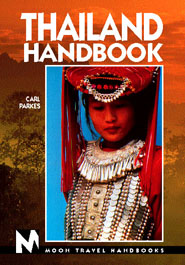
Thailand Handbook

Get Lost bookstore newsletter
July, 2005
A Tale of Two Closings


Rand McNally closed its San Francisco store last
week. The word is that they are closing all their
stores, and that the San Francisco location was
one of the last. On its website, Rand McNally
lists only one store, in Houston. Due to a number
of acquisitions, including Thomas Brothers maps,
Rand McNally controls a sizeable percentage of
the US cartography market. However, Rand McNally
filed for bankruptcy under Chapter 11 in February
2003. A private equity firm took a controlling
interest in the company. Stores began closing,
and the pickings in the remaining locations grew
slim. I’m guessing they will now concentrate on
cartography, especially considering how newer
companies like Mapquest are licensing their own
products to other map companies. (Check out the
United States road atlases of National
Geographic, Michelin and American Map and thank
Mapquest for the cartography.)

I must admit I didn’t feel all that disappointed
when Rand McNally closed. I did feel a sense of
loss, however, when Easy Going, a Berkeley travel
shop, closed earlier this year. Easy Going was a
real mom-and-pop store that will be sorely
missed. Even as its shelves began to thin, they
still continued to host excellent in-store
events. Members of the community briefly rallied
to raise money (or purchase shares, I am not
certain which) to prevent the closure. But, in
the end, it did close. Easy Going, like other
locally owned independent bookstores, took
chances on quirky titles. Like Get Lost, they
carried small or self-published presses,
sometimes on consignment.

On the subject of locally owned, Dan Houston, a
partner in Civic Economics, has done studies
showing that local merchants contribute more than
three times as much economic value back to the
community than do chain stores. (Read an
interview at:

http://mail1.icptrack.com/trac­k/relay.php?r=849243958&msgid=­708610&ac

http://news.bookweb.org/news/3­094.html

or, read one of the reports at

http://mail1.icptrack.com/trac­k/relay.php?r=849243958&msgid=­708610&ac

http://www.civiceconomics.com/­Andersonville/AndersonvilleStu­dy.pdf

This contribution may well be augmented in the
case of locally owned bookstores, which are more
likely to support local or micro presses. Rand
McNally is headquartered in Skokie, Illinois. It
is hard to create a sense of community when
headquarters does your book buying. As I
understand it, the San Francisco store did manage
to carry the Rough Guides, an exception allowed
no other branch store.

When corporate headquarters doesn’t deem it necessary,
(that is,
profitable enough) to stock a quality series of
travel books like the Rough Guides, it probably
won’t carry wonderful, small presses like Garrett
County Press (out of New Orleans), Stone Bridge
Press (out of Berkeley), art-Sites Press (out of
San Francisco) Bored Feet Press (out of
Mendocino) or the self-published Time Off! The
Unemployed Guide to San Francisco, by two San
Francisco authors. I hope this hasn’t sounded
like a lesson in civics. I will miss Easy Going.
I will miss Rand McNally less.

While I am on the subject of local and
independent, get ready for Books by the Bay,
sponsored by the Northern California Independent
Booksellers Association (NCIBA), of which Get
Lost is a proud member. Read our events section
below for details.

Lee Azus
Get Lost Travel Books

Wednesday, November 3, 2010

Writer's Digest Top 100 Writing Websites


Travel Writer Wannabees

Though surprisingly weak in the travel writing website/blog section, this list is generally filled with excellent websites and blogs for the prospective and experienced writer.

**********************************

Writer's Digest
100 Best Websites for 2005
Complete A-Z List

21st Century Publishing
URL: www.julieduffy.com
Learn more about the world of print-on-demand publishing and marketing and promoting your work at this 21st Century Publishing site.

A Long Story Short
URL: www.alongstoryshort.homestead.com
This e-zine features women writers and showcases its favorite contributions to the site. The site’s submission committee provides critiques to aspiring writers, time permitting.

Abbreviationz
URL: www.stands4.com
Since many abbreviations and acronyms are learned on a need-to-know basis, visit this site for thousands of entries, including Internet emoticons.

Absolute Write
URL: www.absolutewrite.com
Do you need freelance work? Stay in the loop with this site’s two newsletters: One lists agents looking for writers, while the other has guidelines, jobs for writers and calls for submissions.

Agent Query
URL: www.agentquery.com
This searchable database shortens your search for an agent. Search by fiction or nonfiction genres and limit your search to agents accepting submissions or e-queries.

Agent Research
URL: www.agentresearch.com/agent_ver.html
Use this free service to see if an agent is on the up-and-up. Agent information is updated from public records.

All Info
URL: www.allinfo-about.com
Visit this site’s specialized links to get information on writing poetry, freelance, fantasy literature and mysteries. Then view the site’s other links for background information on everything from nursery rhymes to jewelry making.

Allbooks Reviews
URL: www.allbooksreviews.bravehost.com
Find a comprehensive list of book reviews in various genres and read authors’ comments at this site.

Angle on Writing
URL: www.angleonwriting.com
A revision checklist, tips to start a writing group and give feedback, plus a 50-question character profile are all available here.

Appollo's Lyre
URL: www.apolloslyre.com
Visit this site for book reviews, submission guidelines and publication venues. Young writers can check out its Junior Muses link. YW

Artella
URL: www.artellawordsandart.com
Artella—the name comes from combining "art" and "telling"—strives to create a new art form by combining words with art. To get your creative juices flowing, the site offers an e-zine, poetry contests, forums and creativity seeds.

Author Mania
URL: www.authormania.com
Visit this site to work on your writing craft by reading its articles that help you build believable characters, plots and more.

AuthorsDen
URL: www.authorsden.com
Use this site to give and receive feedback on books, articles, poetry and stories. Then store your favorite for easy access.

Backspace
URL: www.bksp.org
Find critique forums, tips and writing resources, plus agents, authors and editors as guest speakers in discussion forums. The site has a $30 annual membership fee and offers a free five-day trial.

Bartleby
URL: www.bartleby.com
Go to this site for literary definitions, quotations and access to more than 370,000 Web pages.

berniE-zine
URL: www.rantsravesreviews.homestead.com
You can find book reviews from the site’s editors, plus links to other reviews and a literary "link of the day" at this site.

Blue Oasis Online Support Team
URL: www.boost4writers.com
Blue Oasis Online Support Team exists for children’s writers, but forum discussions and tips benefit writers of all genres.

Writer's Digest Top 100 Websites for Writers -- Including Hot Links

Tuesday, November 2, 2010

So You Wannabe a Travel Writer?


Travel Writer Bondage

Los Angeles Times
Susan Spano
So you want to be a travel writer?


I often receive letters asking how to break in to travel writing. "I love to travel," they generally begin, "and want to share my experiences…. "

There's no easy way to answer the question or to clearly describe this profession. What little has been written about practitioners of the craft is decidedly uncomplimentary.

"What's Become of Waring?" a little lark of a satire written in the 1930s by English novelist Anthony Powell, begins with the sudden death of a famous travel writer who signs his books T.T. Waring, more an alias than a nom de plume for this scoundrel and plagiarist.

As the story unfolds, the reader learns that he has faked his death to keep eager readers from expecting future books by Waring. That's because he has just married a rich widow and no longer needs to write for a living.

Anne Tyler's 1985 novel, "The Accidental Tourist," is also about a travel writer but this one hates to travel. Her Macon Leary writes guidebooks that assist businessmen in moving about the world in an insulated bubble. Between research trips, Leary is a sad-sack couch potato, desperately in need of the psychological shake-up Tyler gives him in the novel.

Santo Cilauro, Tom Gleisner and Rob Sitch wrote a sendup of travel guidebooks that was published two years ago, "Molvania: A Land Untouched by Modern Dentistry," featuring a made-up country and authors. These included Philippe Miseree, a professional traveler who finds every destination he visits "not half as good as it was in the 1970s," and Andy "the Animal" Wilson, whose first trip overseas ended with a prison term for setting fire to a monk in Bali.

Such is the rogues' gallery of travel writers in literature. In reality, they aren't all charlatans and criminals, but they are an odd lot.

Most of them — myself included — have scant preparation and back into the profession, which is an illegitimate child in the world of the letters. There's no graduate program culminating in a master of travel arts degree. Journalists consider it frivolous and easy. Poets and novelists look at it as slumming.

The glamour tends to wear off for those who make travel writing an occupation. It sounds wonderful to fly off to Tahiti or Paris to research a story. But consider the joys of jet lag, sightseeing when you have diarrhea, rental car accidents, the occasional mugging.

Professional travelers can rarely have dogs, gardens, children or any other variety of significant other. And forget the romance of the road. Even if you meet Mr. Right in Jaipur, India, you have to be in New Delhi the next morning.

Rick Steves once told me about the research trips he takes for his "Europe Through the Back Door" guidebook and his public television series.

"When I'm in Europe," he said, "I don't hang out on the beach. I hate being with people, because I'm working. There's no time to be polite when I have to see 15 hotels in a day."

Then, there's the other part of the job people tend to forget: writing on deadline. If they think about it at all, I'm sure they envision Hemingway, cafe-style scribbling, elbow on the table and chin in hand. The truth is it's long days of solitary work, holed up at home or somewhere quiet, drinking cold coffee and writing marvels that are later cut because they're rot.

Travel guidebook writing is particularly thankless, I quickly discovered when I did it in my younger days. The pay isn't great. The formatted nature of series guidebooks curtails creativity, leaving authors' favorite bons mots on the cutting-room floor. Most guidebooks are the work of a team of writers, who share the credit in fine print.

There's more satisfaction in writing about travel for newspapers and magazines, I've found, but full-time positions are rarer than black truffles in the Mojave. As a result, many travel articles are the work of hobbyists and freelancers who know that finding a magazine or newspaper to publish their stories can be harder than researching and writing them.

"Yes," aspirants to the profession say, "but think of such famous travel authors as Frances Mayes, Paul Theroux, Jan Morris. That's the kind of travel writer I want to be."

Me too. But even if you tied Mayes or Morris to a chair, I doubt they'd be able to tell you what it takes to succeed.

When asked that question, all I can do is generalize. To me, the most important component of good travel writing is service; even the finest descriptions are useless without such practical information as opening hours and admission prices. Getting those facts right is about as glamorous as working in telephone solicitation.

Next in importance comes teaching. To travel is to learn, which is chiefly why I love it. So I take educating myself and, in turn, my readers as a mandate.

Finally, aspiring travel writers are only as good as what they read, which is why they need to do so widely and well. Foraging through literature and history provides themes and details beyond those rehearsed by every guidebook on the shelf. It suggests uncommon subjects for stories and magically makes your writing better.

That's partly what led me to "What's Become of Waring?" which, of course, tells only part of the story about the seemingly disreputable, hackneyed profession that people who were concerned about my future often discouraged me from pursuing. I took a lot of wrong turns along the way but then got lucky. All caveats aside, travel writing is a job in a million. I'll never fake my death, even if I land a rich widower.

Los Angeles Times Story about Travel Writing Profession

Monday, November 1, 2010

Don George Offers Tips to Hopeful Travel Writers


Party with Don George!

Eight Diagrams
May 11, 2005
Interview with Lonely Planet's Don George
Interview by Wayne Yang


I have been a fan of the Lonely Planet (LP) travel guides since I first stumbled onto them when I was traveling in Asia in the late 1980s. Other guidebooks tend to give you cut and dried descriptions of well-known sites and hotels. LP gives you the kind of candid recommendations that you can expect from friends who have traveled to a location. And the books are also often colorfully written. So you can imagine my excitement when Don George, the Global Travel Editor of Lonely Planet Publications, agreed to an interview.

Don was travel editor at the San Francisco Examiner & Chronicle. He was also the founding editor of Salon.com's travel site, Wanderlust. He has edited four travel anthologies. Earlier this year, he published the Lonely Planet Guide to Travel Writing, which gives his tips on how to become a travel writer.

WY: You have one of the best "getting started" in the travel writing business stories. I cannot imagine one that better illustrates how to marry audacity and talent. How well do you think your experience still serves as a model for others who want to get started in travel writing?

DG: I think the general principles that story illustrates are still valid: Identify what you really want to do, then identify and explore - with sensitivity, intelligence, respect and care -- all the avenues that could help you do that; keep refining your craft and your goals at the same time; knock on all the potentially appropriate doors and when they open a crack, keep them open. To all that I would add: Look for mentors and honor them and learn scrupulously from them when you find them.

WY: In addition to the rise of online venues, how has the market for travel writing changed or not changed since you got started?

DG: I think there is more competition - more would-be travel writers -- now than when I was getting started. Unfortunately, there has not been a proportionate increase in the number of outlets for travel writing, and the budgets at the existing outlets have not risen proportionately, either.

WY: You have written that you became interested in traveling because of your need to "understand everything," "our reason for being here." Why did that process involve reading, writing and traveling, and what do you think you have learned about "our reason for being here?"

DG: It was intuitive for me - I reveled in new experiences and the learning they embodied. Once I lived abroad, I quickly realized that for me, the world was the best classroom. Reading was a way to deepen my appreciation of what I was experiencing, and writing was a way to organize it and analyze it, give it a coherent place in the puzzle of my life. As for our reason for being here, I'm still puzzling through that, but I think it has something to do with absorbing as much of the planet as we can, sowing kindness and compassion wherever we go, increasing global understanding and respect, furthering the evolution of the planet toward peace and harmony, and living as fully, mindfully and reverently as we can.

WY: Can you mention what reading was instrumental in your development as a travel writer?

DG: James Joyce, William Butler Yeats, Wallace Stevens, T.S. Eliot, W. S. Merwin, Ernest Hemingway, F. Scott Fitzgerald - well, basically, the usual-suspect 20th-century American and European canon of poets and fiction writers one studied in high school and university in the 1970s. These were my initial inspiration and nurturing to become a writer.

WY: Any which were particularly seminal to you?

DG: The most seminal moment for me was my senior year at Princeton taking a small, selective writing workshop taught by John McPhee called "The Literature of Fact." That taught me that nonfiction could be just as artful and elevated as all the fiction and poetry I'd been studying, analyzing and pedestal-izing all those years. The "travel" writers I have most learned from are Jan Morris, Tim Cahill, Pico Iyer, Annie Dillard, Paul Theroux and Peter Matthiessen.

WY: About traveling to Africa: you have talked about the overwhelming feeling that you were a human in nature's country. How much of that feeling do you still get on traveling into the wilderness?

DG: I still get it, still overwhelmingly.

WY: How is that different from your feeling on urban excursions?

DG: Urban wildness can be overwhelming, too, but without that frisson of being in the presence of some universal power or truth infinitely greater than you are.

WY: You have said that travel writing is an art, not just a letter home. You talk about shaping travel into "tales." What makes good travel writing good?

DG: I spend much of my book talking about this, but in essence: The writer has digested his/her experience, gleaned a fundamental truth or lesson from it and then shaped the story so that it reveals that lesson step by step.

WY: What are your feelings on how much creative non-fiction / literary techniques should be used?

Essentially, a good travel story is like a good work of fiction, with a beginning, a middle and an end, characters and conflict, dialogue, telling details, a narrative arc. The full range of literary techniques should be employed.

WY: You once complimented a writer for how his book was "very Lonely Planet-ish," because its focus was "very traditional, rooted in the ground." Can you give us further insight into what it means to be "very Lonely Planet-ish?"

DG: I think being "very LP-ish" means staying true to an experience, staying rooted in the nitty-gritty riches of a place and a people, understanding the place's/experience's background and context, experiencing openly and as fully as possible, seeing with unflinching eyes, and traveling with respect and awareness.

WY; Submission guidelines seem to always discourage writers from submitting photographs with their queries. Obviously, the average writer is not going to be a very good photographer. Assuming, however, that someone is not deterred, that he thinks he is good at both, how is the submission process different for him as a writer-photographer?

DG: It is hard to be great at both writing and photography because you use your mind in different ways as a writer and as a photographer. But it is certainly possible: When I was at the Examiner & Chronicle, I had to take photos to go with my stories, and some of these won photo awards. But if you want to do both, you have to leave sufficient time for both or master the art of switching from reporter-writer to photographer and back again. I think someone who feels they have great photos to go with their great story should simply submit a dozen outstanding examples of their work when they submit their story. All the editor can do is say, No thanks. Submitting photos will not disqualify the article. And there are some lower-tier publications that very much welcome photo-text packages.

WY: In your own experience, you mention the importance of serendipity in propelling your career, but obviously you put yourself in position to benefit from that kind of good fortune. What steps (besides reading the Lonely Planet guide "Travel Writing," of course!) should an aspiring travel writer take to ensure they see more serendipity in their own development?

DG: I would repeat what I said in my first answer: Identify what you really want to do, then identify and explore - with sensitivity, intelligence, respect and care -- all the avenues that could help you do that; keep refining your craft and your goals at the same time; knock on all the potentially appropriate doors and when they open a crack, keep them open. We make our own serendipity. Part of it is talent, part of it is cultivating possibility, and part of it is being open to opportunity when it suddenly presents itself.

My favorite book of all is The Snow Leopard, by Peter Matthiessen, a masterful combination of intensely personal exploration and intensely vivid description, infused with a searing, soaring humanity, spirituality and intelligence. Also on the list, in no particular order: Paul Theroux, especially The Great Railway Bazaar; Bruce Chatwin, In Patagonia; John McPhee, Coming into the Country; Annie Dillard, Pilgrim at Tinker Creek; Pico Iyer, Video Night in Kathmandu; Tim Cahill, Pass the Butterworms; Jan Morris, Journeys (just about anything by Jan Morris is transcendent, but Journeys is a good place to start).

Eight Diagrams Interview with Don George

Sunday, October 31, 2010

Travel Quotes from Southeast Asia Handbook


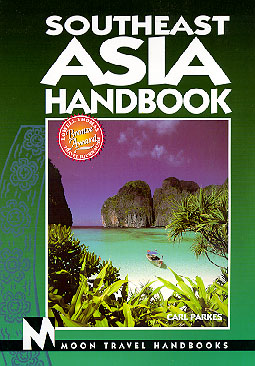
SE Asia Handbook by Carl Parkes Posted by Hello


To many people holidays are not voyages of discovery, but a ritual of reassurance.
--Philip Adams, Australian Age

Travel broadens the mind.
--Anonymous

Three hundred years in a convent and fifty years in Hollywood.
--Anonymous

Though an airplane is not the ideal place to really think, to reassess or reevaluate, it is a great place to have the illusion of doing so, and often the illusion will suffice.
--Shana Alexander

Never journey without something to eat in your pocket. If only to throw to dogs when attacked.
--E.S. Bates

There are two kinds of travel--first class and with children.
--Robert Benchley

If the doors of perception were cleansed every thing would appear to man as it is, infinite.
--William Blake

The traveler is active and strenuously searches for people, adventure and experience. The tourist is passive and waits for things to happen.
--Daniel J. Boorstein

In traveling: a man must carry knowledge with him, if he would bring home knowledge.
--James Boswell, Life of Samuel Johnson

Countries, like people, are loved for their failings.
--F. Yeats Brown, Bengal Lancer

"Are you a god?" they asked.
"No."
"An Angel?"
"No."
"A saint?"
"No."
"Then, what are you?"
Buddha answered, "I am awake."
--Buddha

Of the gladdest moments in human life, methinks, is the departure upon a distant journey into unknown lands. Shaking off with one mighty effort the fetters of Habit, the leaden weight of Routine, the cloak of many Cares and the slavery of Home, man feels once more happy.
--Richard Burton, Journal

To travel in Europe is to assume a foreseen inheritance; in Islam, to inspect that of a close and familiar cousin. But to travel in farther Asia is to discover a novelty previously unsuspected and unimaginable.
--Lord Byron

Every man carries within himself a world made up of all that he has seen and loved; and it is to this world that he returns incessantly, though he may pass through, and seem to inhabit, a world quite foreign to it.
--Chateaubriand, Voyage en Italie

For some ill-defined reason, lovers have a particular penchant for travelling, perhaps in the hope that by exchanging backdrops for that of the unknown, those fleeting dreams will be retained a little longer.
--Carole Chester

I shall always be glad to have seen it--for the same reason Papa gave for being glad to have seen Lisbon--namely, that it will be unnecessary ever to see it again.
--Winston Churchill

The glamour of the East had cast its spell upon him; the mystery of lands in which no white man had set foot since the beginning of things had fired his imagination; the itch of travel was upon him, goading him to restlessness.
--Hugh Clifford, The Story of Exploration

I prefer mythology to history because history starts from the truth and goes towards lies and mythology starts from lies--fantasy--and goes toward truth.
--Jean Cocteau

There are only three things which make life worth living: to be writing a tolerably good book, to be in a dinner party for six, and to be traveling south with someone whom your conscience permits you to love.
--Cyril Connolly, A Romantic Friendship

I believe if I were to one day accept a religion, it would be of Buddhism. No other faith seems to offer such an eloquent expression of hope and beauty with its array of imagery, fashioned seemingly by devoted geniuses of a fantasy world.
--Joseph Conrad, The Shadow Line

Some men go skimming over the years of existence to sink gently into a placid grave, ignorant of life to the last, without ever having been made to see all it may contain of perfidy, of violence, and of terror.
--Joseph Conrad

Everybody in the world is a little mad.
--Joseph Conrad, The Shadow Line